Total Reviews
74,896
We analyzed Booking.com reviews and grouped hotels into segments (groups with similar guest feedback patterns). This helps hotel teams see what to fix first without reading thousands of comments manually.

Review source
Booking.com guest reviews
This page summarizes findings from real Booking review text. Segment results are used for planning service priorities, while illustrative views are used only to explain decisions.
Total Reviews
74,896
Hotels Covered
458 hotels
Guest Segments
10 segments
Evidence Tier
Reported
This page turns a large set of guest comments into practical hotel action priorities. You do not need a statistics background to read it.
What was analyzed
The dataset includes 74,896 Booking.com reviews from Da Nang hotels between 27 Nov 2022 and 27 Jan 2026.
How to read the figures
Use reported figures for decisions. Treat illustrative figures as communication aids that explain logic and sequencing.
Decision output
Focus on repeated pain points across segments to prioritize service improvements with the clearest guest impact.
This market snapshot adds context to the segment findings using current global and local tourism signals. It helps teams choose priorities that are relevant to both demand growth and operating pressure.
Global International Arrivals (2024)
1.4B
UN Tourism reports the market returned to roughly 99% of pre-2019 levels.
International Arrivals (Q1 2025)
300M
Momentum remained positive at +5% year-over-year in early 2025.
Global Room-Night Demand (2024)
4.8B
JLL estimates demand rose by 102 million room nights from 2023.
Hotel Investment Volume (2024)
$57.3B
Global hotel transactions increased around 7% and liquidity improved.
Da Nang 2025 Visitor Plan
11.9M
Local target includes 4.8 million international overnight visitors.
Bar lengths are normalized for visual scanning and should not be read as directly proportional across unlike metrics.
In high-growth windows, service-lag penalties rise quickly. Segment playbooks should prioritize response and turnaround metrics.
Improving transaction liquidity supports selective upgrades. Target capex on pain points with both high volume and high severity.
PwC's U.S. 2026 view points to a moderate cycle (occupancy around 62%, RevPAR +0.9%), so pricing and service quality must move together.
Step 1
Gather and clean Booking review text so the dataset is consistent.
Step 2
Identify key topics such as room, service, location, and cleanliness.
Step 3
Use two grouping models (K-means and GMM) and keep patterns that stay consistent.
Step 4
Confirm that segment groups are clearly separated and stable.
Step 5
Translate the segment patterns into service, pricing, and upgrade priorities.
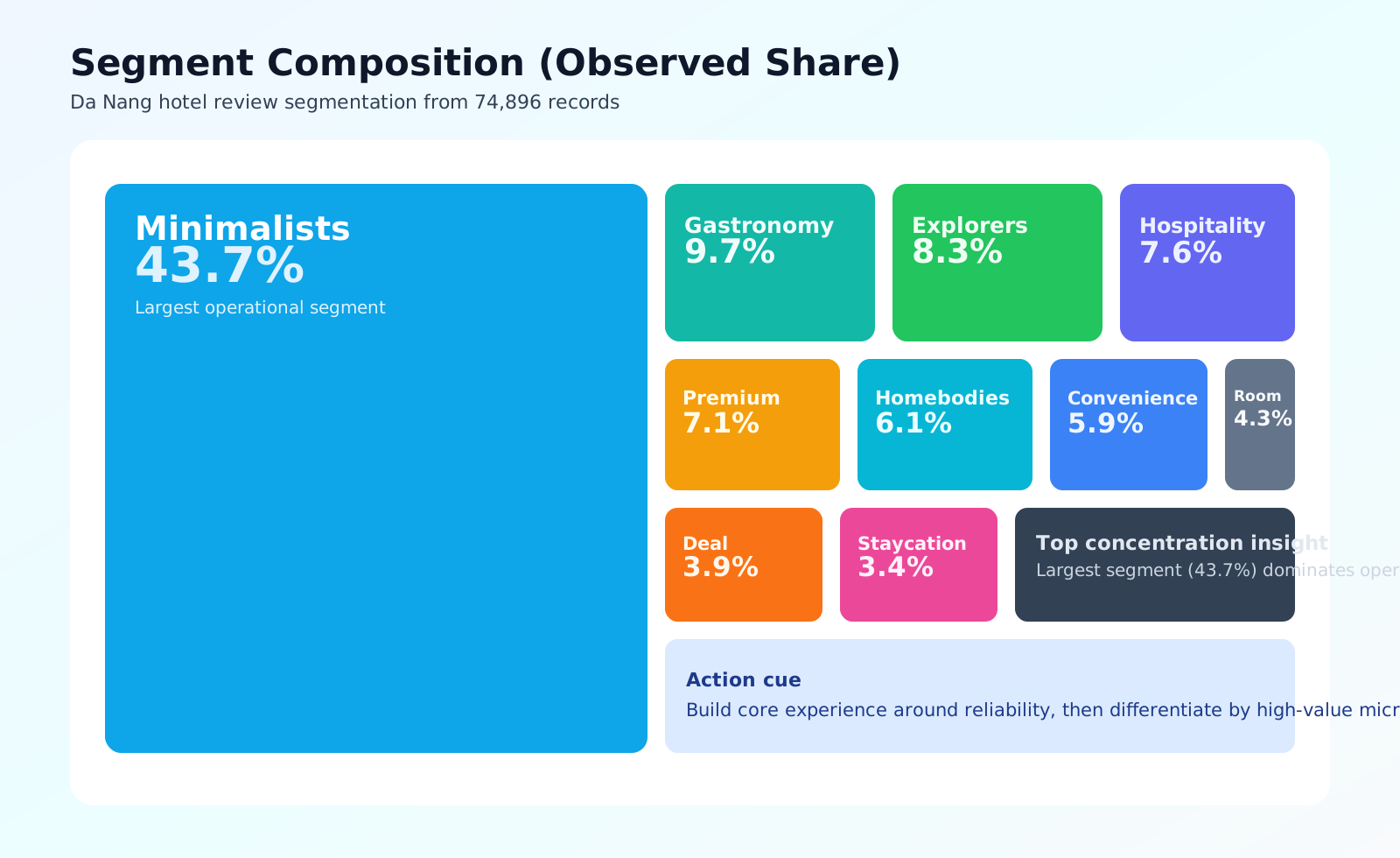
Start here to see review volume trends and the baseline segment mix.

This chart checks whether segment groups are distinct enough to use in planning.

This layer highlights where guest pain points concentrate. The second map is illustrative and used for communication only.

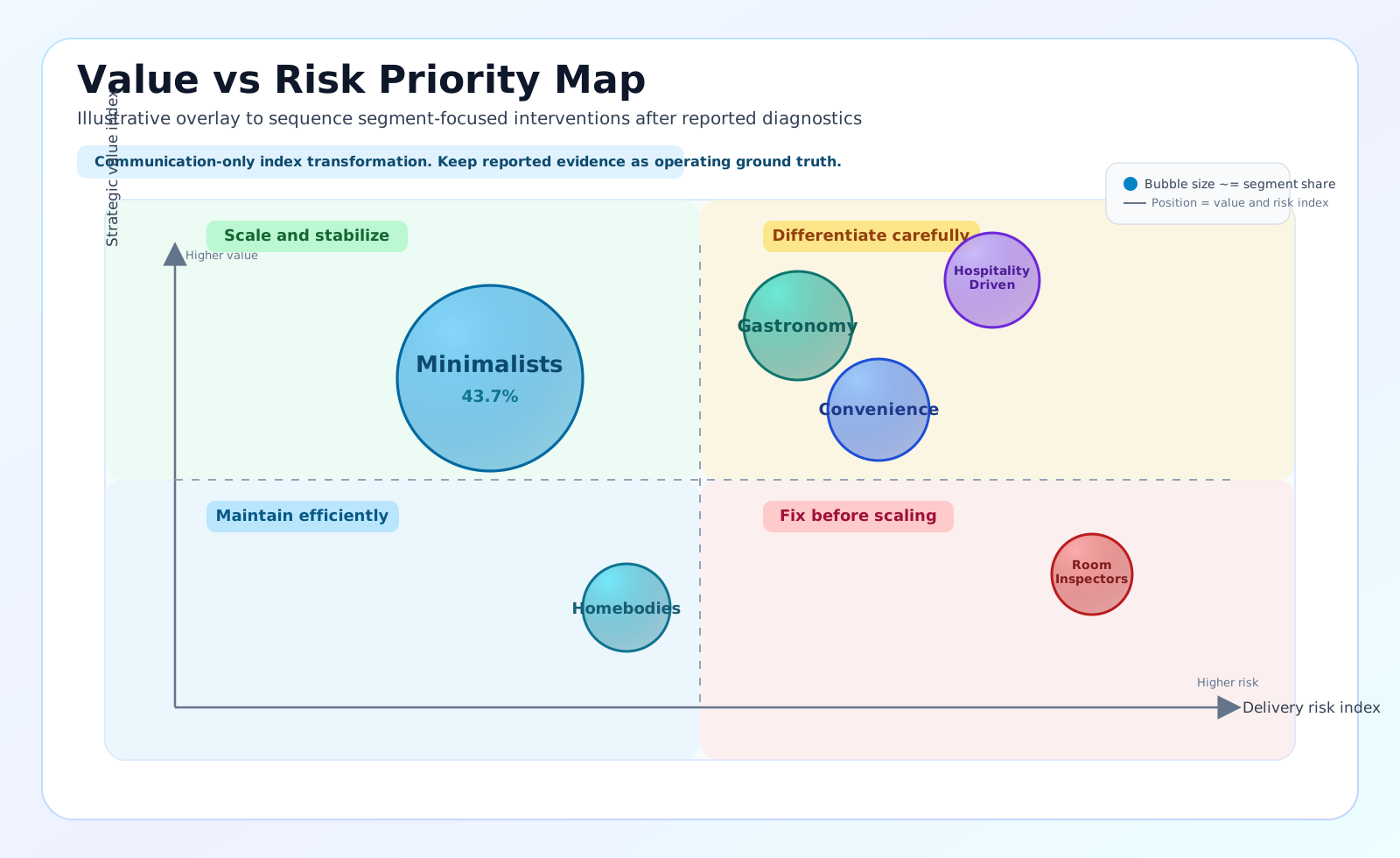
Across 74,896 Booking reviews from 458 Da Nang hotels, guest dissatisfaction clusters in a few repeatable operational issues rather than being evenly spread across all service attributes.
Use reported diagnostics (segment share, separation check, and the pain-point heatmap) for decisions. Use illustrative maps only to explain the reasoning to stakeholders.
Evidence base
The study covers 10 guest segments in one market and one review window (27 Nov 2022 to 27 Jan 2026), which is strong for local planning.
Priority signals
The strongest repeated issues are service response lag, room consistency gaps, and arrival or checkout friction.
Interpretation rule
Operational choices should rely on reported evidence layers, while illustrative visuals are best used to explain sequencing and align stakeholders.